About the game
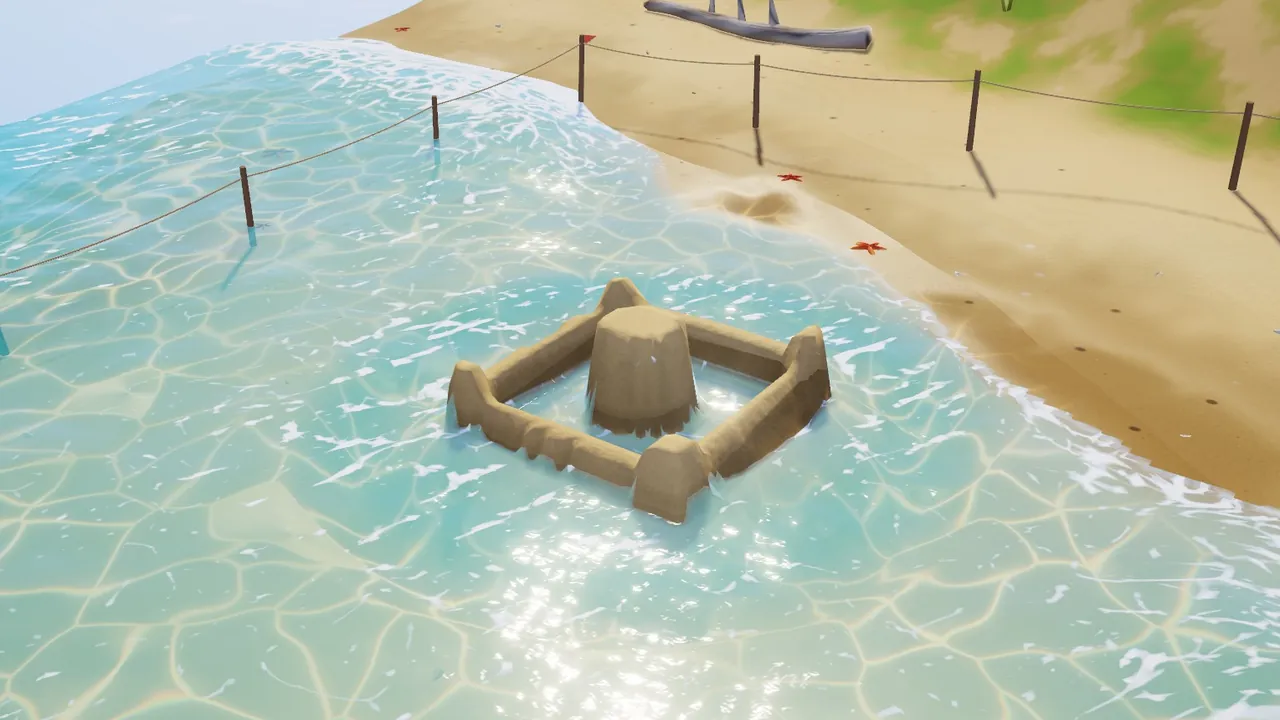
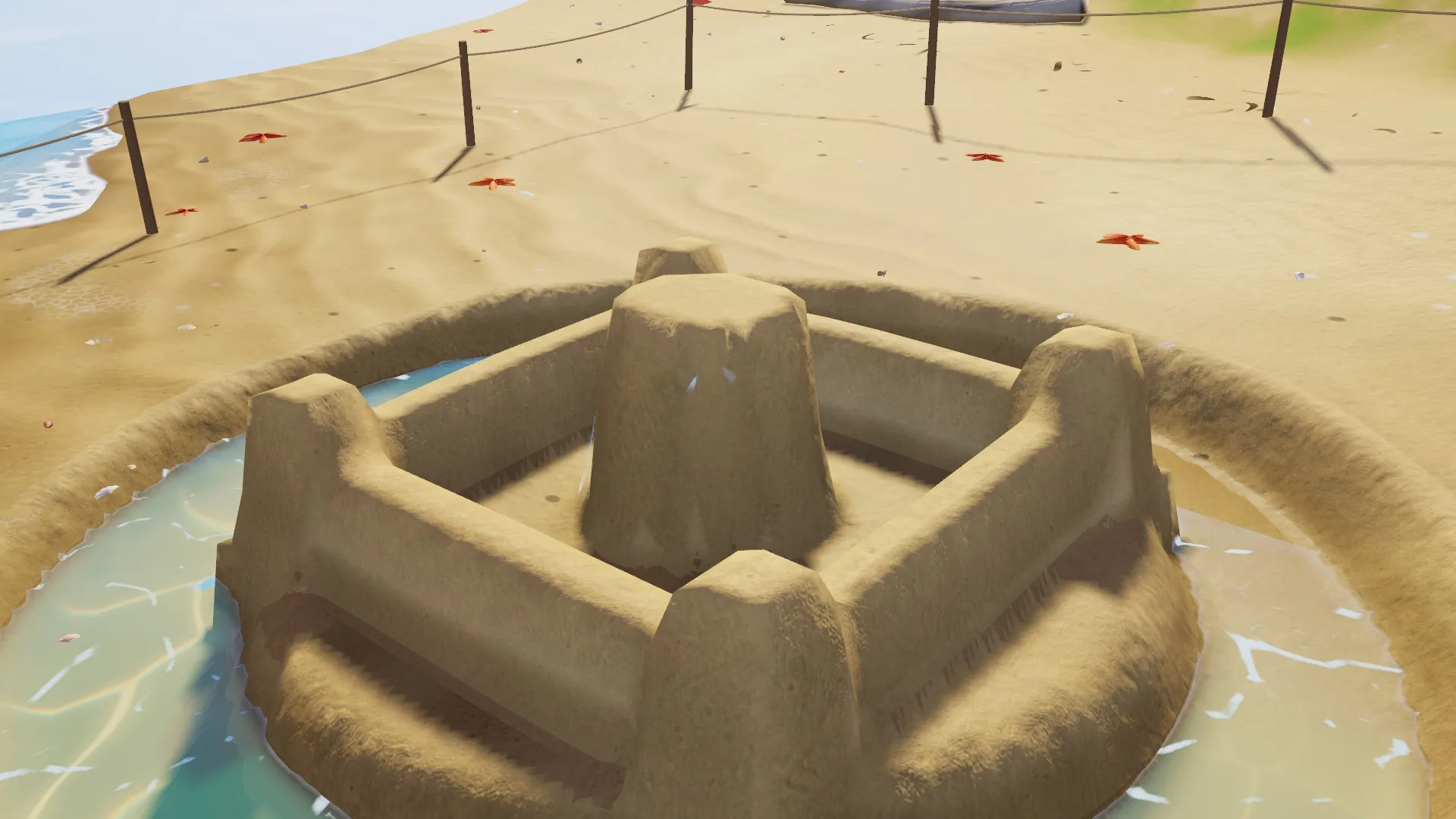
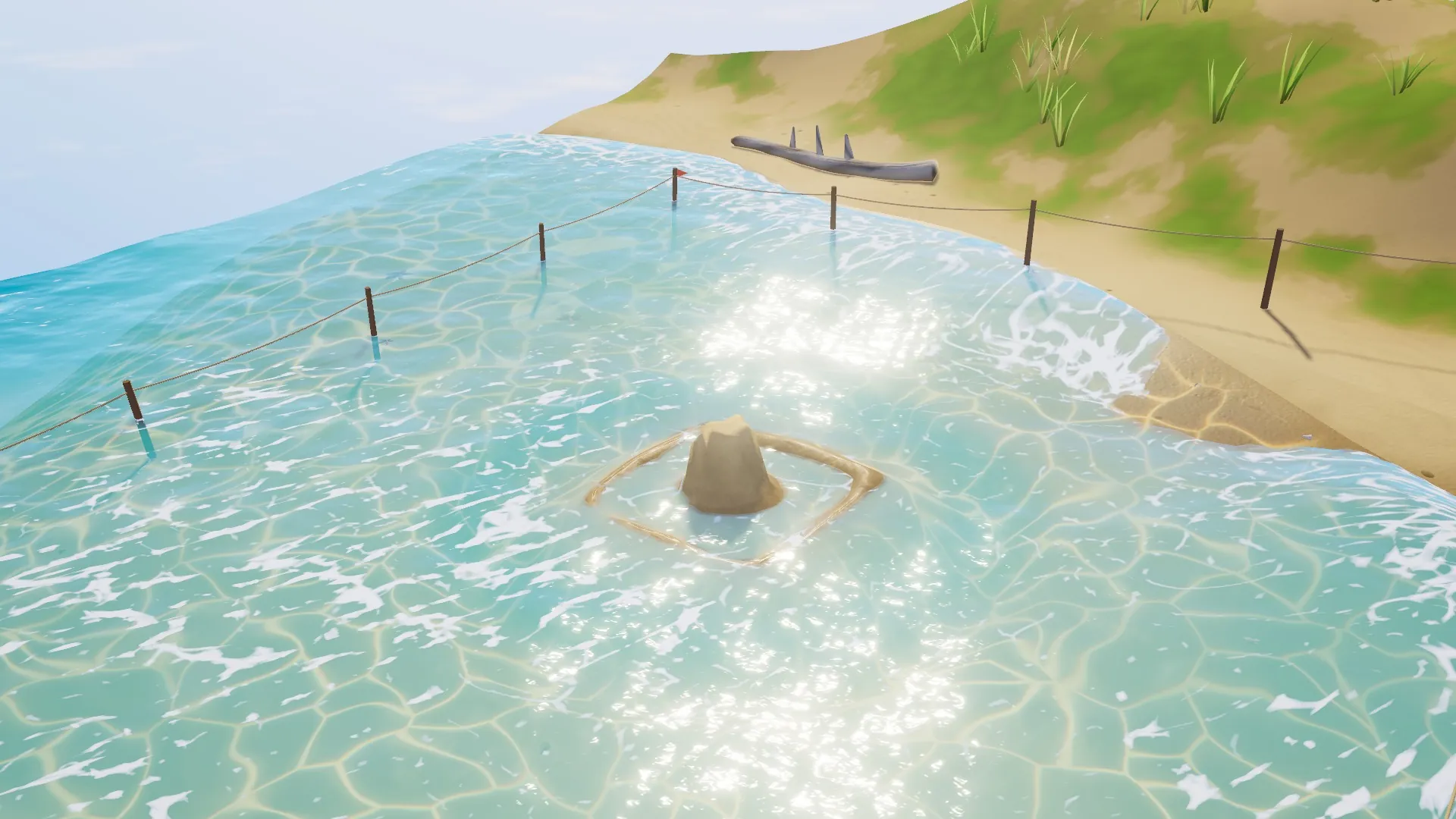
Sandcastles & Waves is a free 3D sandcastle-building game that runs in your browser. The tide is out on a sunny, stylised coast. You get a bucket, a patch of tidal flat and ten tools. Build the best castle you can — then press Done and watch the wind push storm waves up the beach, one after another, to see how much of it survives.
There is no timer while you build. Shape towers and walls, dig a moat, plant a flag on the keep. When the storm starts, every wave has a random run-up that grows as the storm builds, so no two storms are the same.
How to play
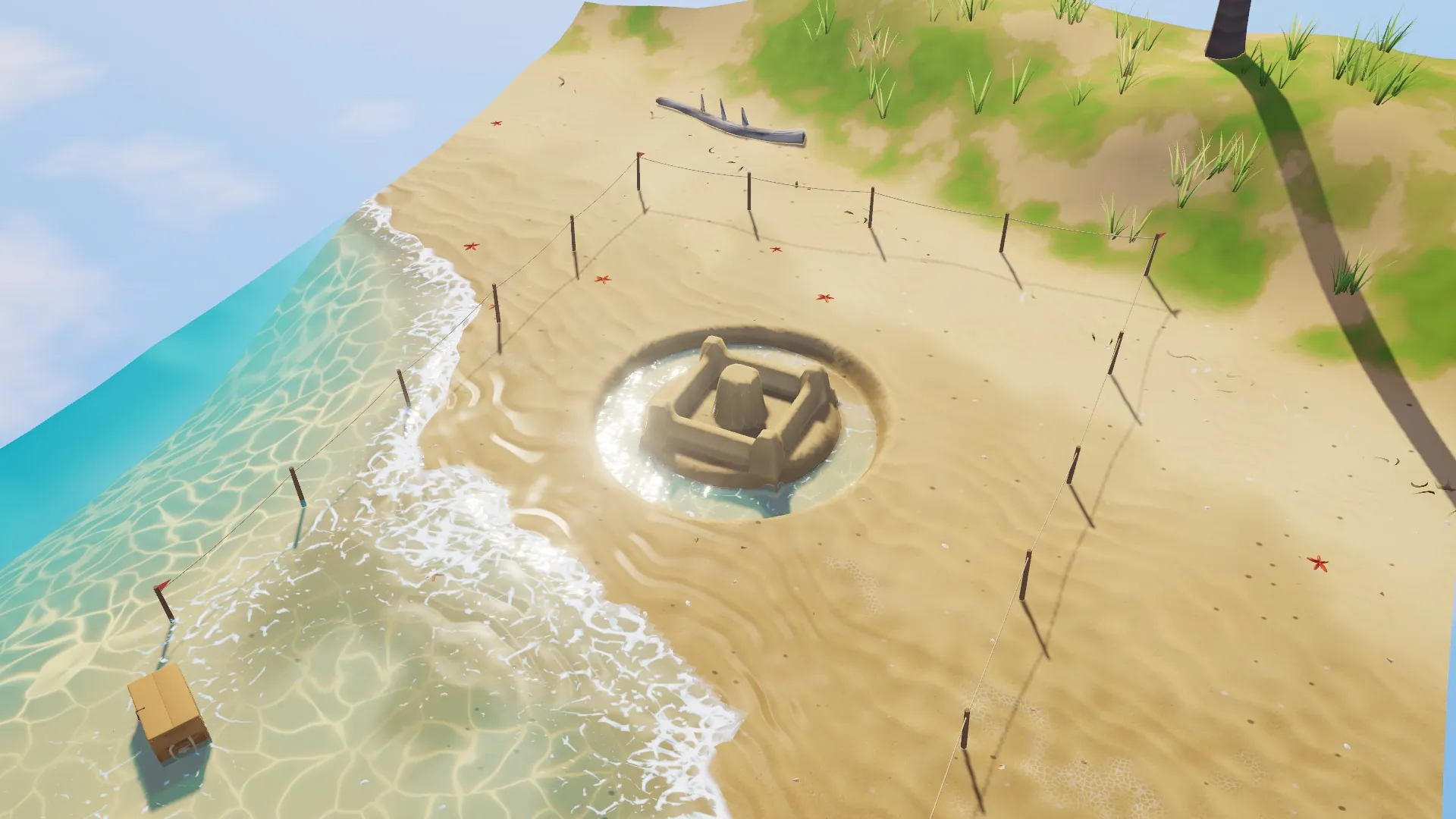
- Start building. Press Build a sandcastle and the camera flies to the building site on the tidal flat, marked out with stakes and rope.
- Dig for sand. Hold the dig tool to fill your bucket. The deeper you dig and the closer you are to the sea, the wetter the sand.
- Shape your castle. Pile, smooth, pat and carve. Stamp round or square towers with the bucket, drag out walls and moats, and add decorations.
- Face the storm. Press Done when you are happy. Twelve waves (about 90 seconds) wash over the flat, fill your moat and batter your walls.
- Check your score. Integrity is the share of your castle that is still standing: 70% earns three stars, 45% two and 20% one. Then Patch it up and try again, or Build another.
Sand that behaves like sand
The sand is simulated, not animated. Every 3.9 cm of the building site tracks its own height, moisture and compaction:
- Moisture matters. Damp sand is the strongest. Dry sand slides down to a gentle slope of about 33°, while patted wet sand can stand almost vertical. Waterlogged sand softens and slumps.
- Water is real. Waves enter the site and are solved with shallow-water equations: they climb the slope, pour into your moat, push against your walls, overtop them and drain back to sea, carrying sand with them.
- Erosion is physical. Fast water picks up sand and drops it where it slows down. A rising wave front gnaws at the faces of your walls, and soaked walls collapse into loose sand that washes away even faster.
Tips for a castle that lasts
- Take sand from deep, wet holes close to the waterline — and pat everything you build.
- A moat in front of the castle absorbs the first rush of each wave.
- Thick, low walls survive longer than thin, tall ones.
- Patted sand that dries out keeps a hard crust, so building early and patting well pays off.
Controls
| Input | Action |
|---|---|
| 1 · Dig | Hold to dig; the sand goes into your bucket. Deeper and closer to the sea means wetter sand. |
| 2 · Pile | Hold to pour sand from the bucket. Wet sand stands steep; dry sand slumps to about 33°. |
| 3 · Smooth | Smooth the surface without losing sand. |
| 4 · Pat | Compact the sand so it stands steeper and resists the waves. |
| 5 · Carve | A small hard-edged trowel for battlements and windows. |
| 6 / 7 · Tower / Square | Flip the bucket to stamp a round or square tower (needs wet sand; size and height adjustable). |
| 8 · Wall | Drag to build a wall (width and height adjustable). |
| 9 · Moat | Drag to dig a trench; incoming waves fill the moat first. |
| 0 · Decor | Place flags, scallops, conch shells, starfish and pebbles. |
| Left mouse | Use the current tool. |
| Right-drag · Wheel · Middle-drag | Rotate, zoom and pan the camera. |
| [ and ] | Change the brush size. |
| Ctrl+Z / Ctrl+Y | Undo / redo. |
Screenshots
FAQ
Is Sandcastles & Waves free to play?
Yes. It is free and runs directly in your web browser — no download, no install and no account.
How do you play Sandcastles & Waves?
While the tide is out, use ten tools (Dig, Pile, Smooth, Pat, Carve, Tower, Square, Wall, Moat and Decor) to build a sandcastle. When you press Done, the wind picks up and 12 storm waves of random height crash into your castle. Your score is how much of the castle survives.
How is the score calculated?
Integrity is the share of your finished castle's sand that is still in place after the storm. 70% or more earns three stars, 45% two stars and 20% one star. Your best result is saved in your browser.
Why does my sandcastle keep collapsing?
Dry sand can only hold a slope of about 33°. Dig deeper or closer to the sea to get wetter sand, pat it to compact it, and avoid soaking it — waterlogged sand turns soft and slumps.
Can I play on a phone or tablet?
Not yet. The game is designed for desktop and laptop computers with a mouse, a keyboard and a reasonably capable graphics card.
What language is the game in?
The game is available in English, Simplified Chinese, Hindi, Spanish, Arabic, French, Bengali, Portuguese, Russian, Indonesian, and Filipino. It follows your browser language automatically, and you can switch languages in the in-game settings panel.
What technology is it built with?
It is a WebGL 2 game built with three.js. The sand and water are simulated in real time: every few centimetres of sand tracks its own height, moisture and compaction, and the waves are solved with shallow-water equations that erode and carry sand.
Updates
A compact floating beach
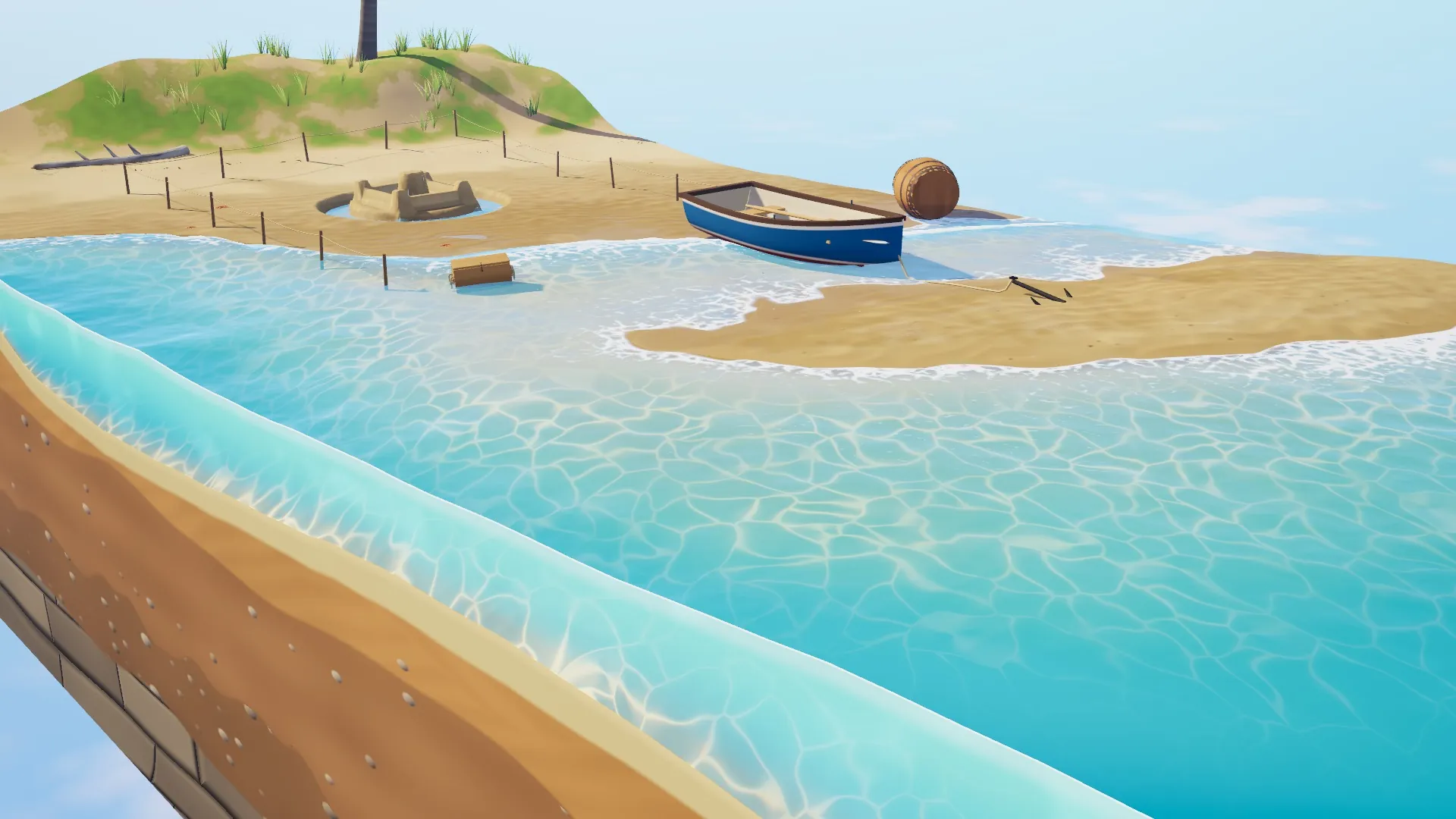
The map is now a compact floating beach diorama built around the sandcastle site — 10 × 22.5 m with cut-away soil and water cross-sections. Far fewer assets to download, and the first load is about 40% faster.
Sandcastles & Waves is playable
The coast becomes a game: build a castle at low tide with ten tools, then face 12 storm waves of random height. Includes wet-sand physics, erosion, music and sound effects.
A 100 × 100 m living coast
The original diorama grows into a full coastline with swell, tides that move the waterline, and floating objects that bob on the waves.
First coastal diorama
A stylised 10 × 10 m stretch of beach with water, rocks and palms — the seed of the game.
Credits
3D models and textures from Poly Haven (CC0). Music: Feel Good Island by Brandon Morris (HaelDB) and Krakatoa by Kistol, both CC0 via OpenGameArt. Sound effects by Freesound contributors (CC0). Original models, sand materials and audio processing by our team. Rendering by three.js.